Facts from public sources, not quotes. Where these numbers come from
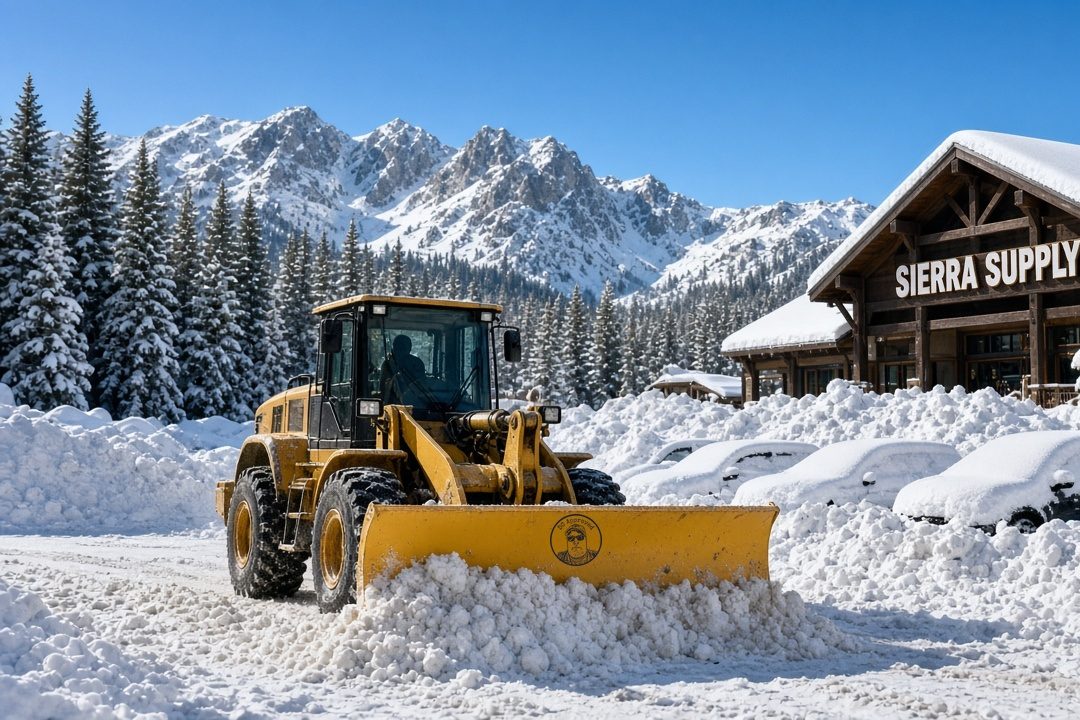
Driveways, plow berms, roofs, decks and commercial lots cleared all winter across Truckee and the North Shore. Lock in your spot on a local crew's route before the first snow, or request a storm-day visit.
Get a free quote How it worksSnow here is measured in feet. Federal climate normals for the Truckee Ranger Station (NOAA, 1991–2020) put the average season at 206.6 inches of snow, and Tahoe City averages 179.0. February is the snowiest month in Truckee at 47.9 inches, with December at 44.2 and January at 43.6. About 41.9 days a year bring an inch or more.
The season starts early. Our analysis of NOAA daily records puts the median first measurable snow in Truckee on November 2 and in Tahoe City on November 3. The normal January day in Truckee runs from a high of 41.8°F to a low of 16.1°F.
The best time to line up snow removal is before you need it. Routes fill up in the fall, and the people who call after the first big storm wait in line.
Truckee Snow Masters connects homeowners, second-home owners, HOAs and businesses in Truckee, Tahoe Donner, Glenshire, Kings Beach, Tahoe City and Incline Village with a local snow and landscape crew that plows, shovels and clears roofs all winter. Every number on this site links to its public source, and we tell you what we don't know.
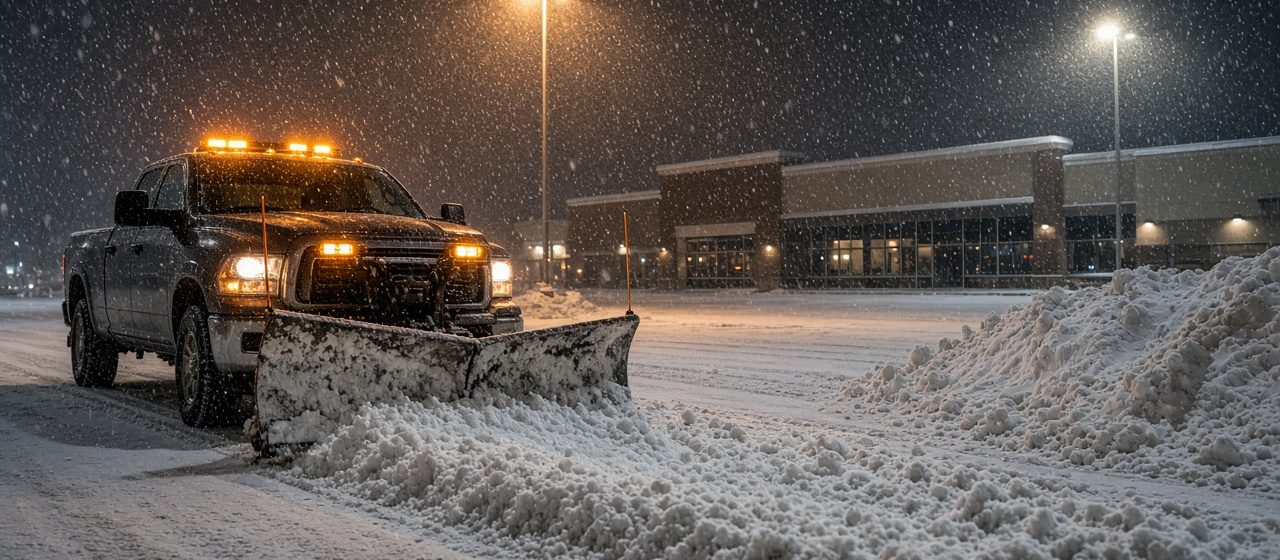
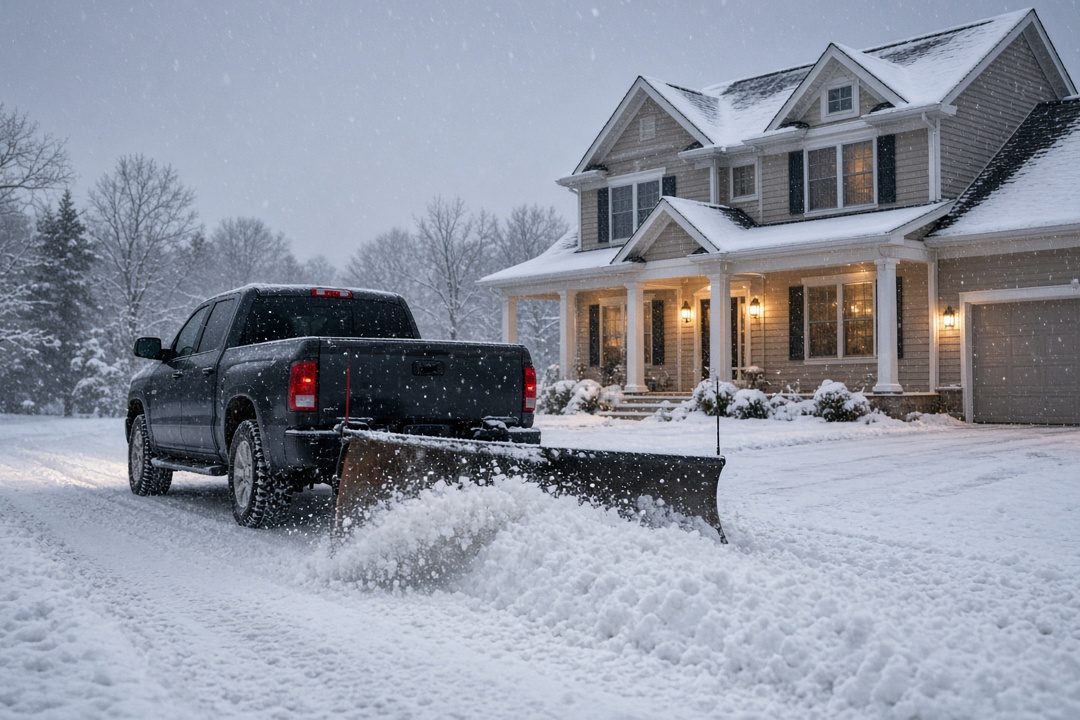
A seasonal residential contract puts your driveway on a route. When snow reaches the trigger depth in your contract, the crew comes without a phone call. Most plans cover the driveway and the front walk, and many add steps, decks and a pass of ice melt.
The berm is the part people forget. The Town of Truckee says it is the responsibility of the homeowner or resident to clear the berm the Town plow leaves across their own driveway. Ask whether your plan includes a return pass after the Town plow goes by.
Where the snow goes matters too. The Town says the road right-of-way, usually 60 feet wide or about 30 feet from the road centerline, is for the Town's snow storage, not for individuals. Your snow stays on your property.
If you clear your own walk between visits, a wide snow pusher or a shovel with a spring-assist handle saves your back, and a pet-safe ice melt is kinder to paws on the front step.
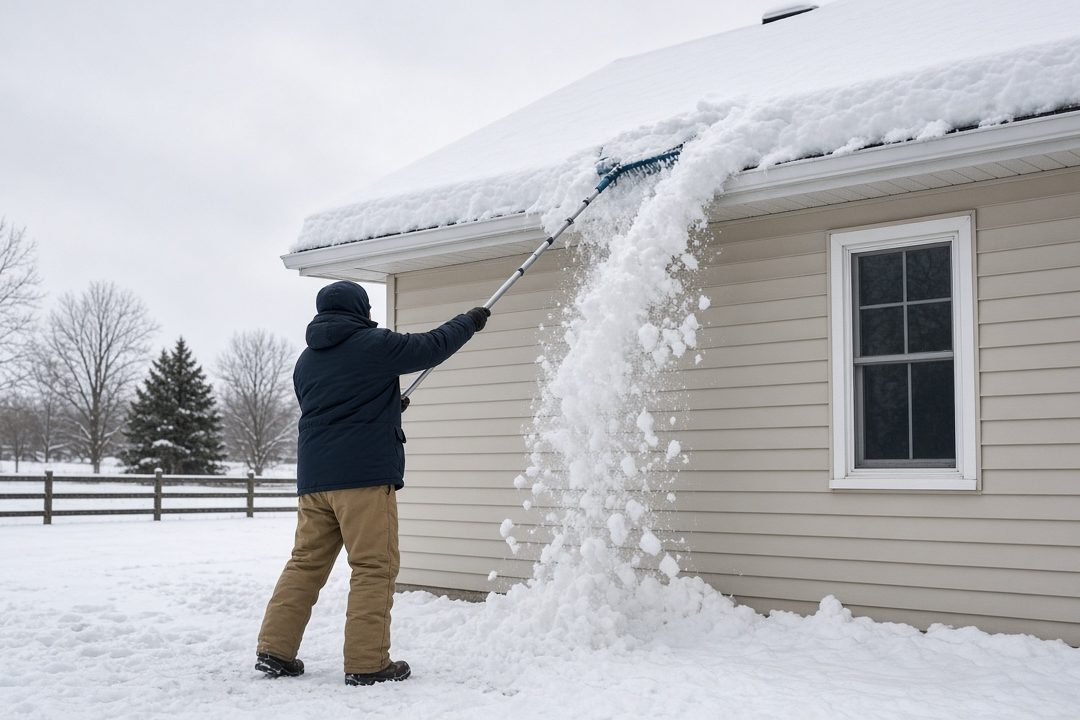
With more than 40 inches of snow in each of Truckee's three snowiest months (NOAA), roofs carry a lot of weight. Heavy snow at the roof edge can melt and refreeze into ice dams that push water under shingles.
From the ground, a 30 ft roof rake with a slide or a 20 ft roof rake can keep the edge clear. Anything that needs a ladder or a climb is a job for a pro with the right gear. As a national estimate, HomeGuide lists roof snow removal at $200 to $500 a visit, or $1,000 to $2,000 for large or steep roofs.
Away for weeks at a time? A second-home snow check after each big storm can cover the driveway, the berm, the walks and a look at the roof edge.
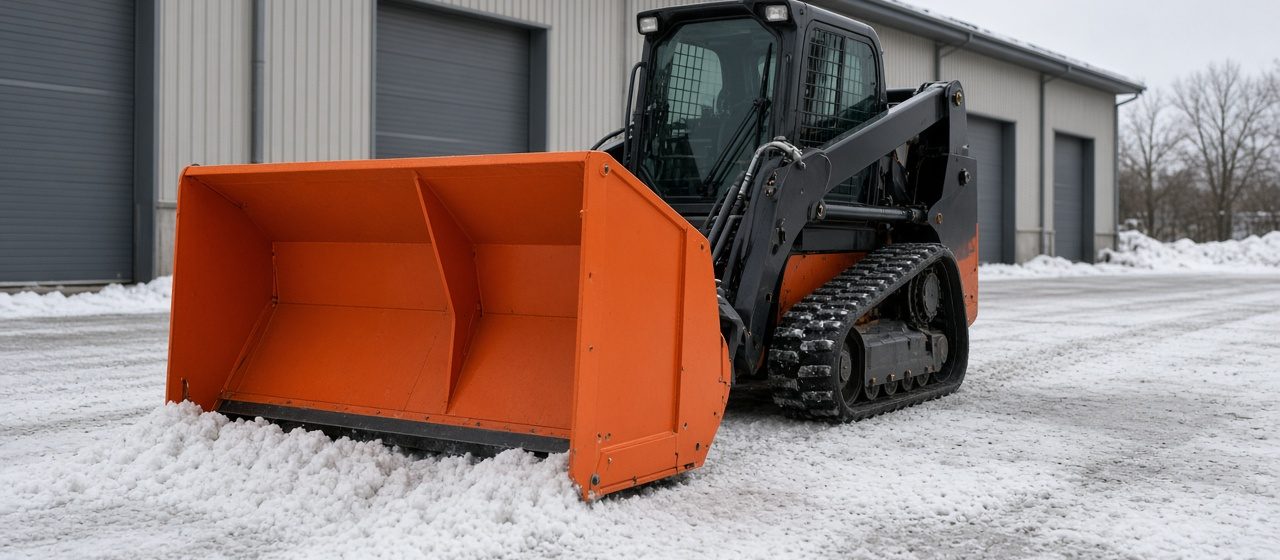
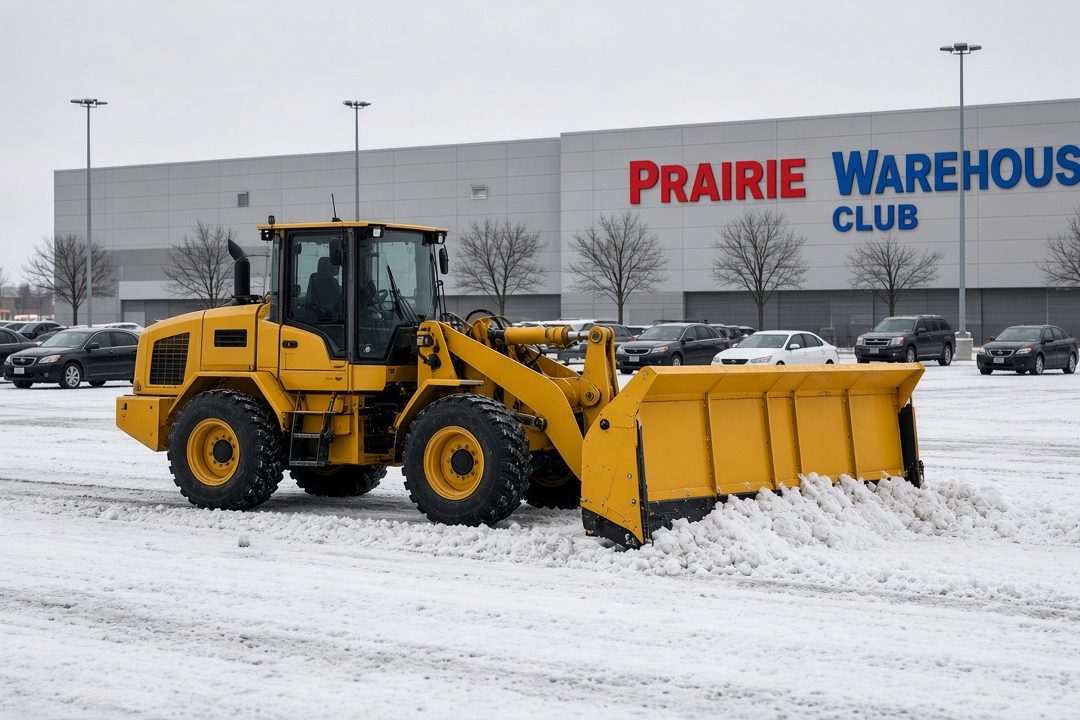
The typical machine for a big lot is a wheel loader with a snow pusher box, the kind of rig that moves a whole lane of snow in one pass and stacks it at the edge of the lot (see a 102-inch skid steer pusher box in the Ice Fighter shop). It's the right tool for retail centers, lodging, condo and HOA lots, offices, medical buildings and schools where cars and guests need clear lanes before the doors open.
Big commercial work runs on a plan. A good contract lists the plowing trigger, when the lot must be open, where the snow piles go on site, how the drive lanes, loading docks and fire lanes are handled, and how walks and salting are billed. With storms this deep, ask how many machines will be on your site and how often they return.
As a national estimate, HomeGuide lists commercial plowing at $50 to $150 an hour and snow hauling at $80 to $200 an hour. Every commercial price is set after a walk-through.
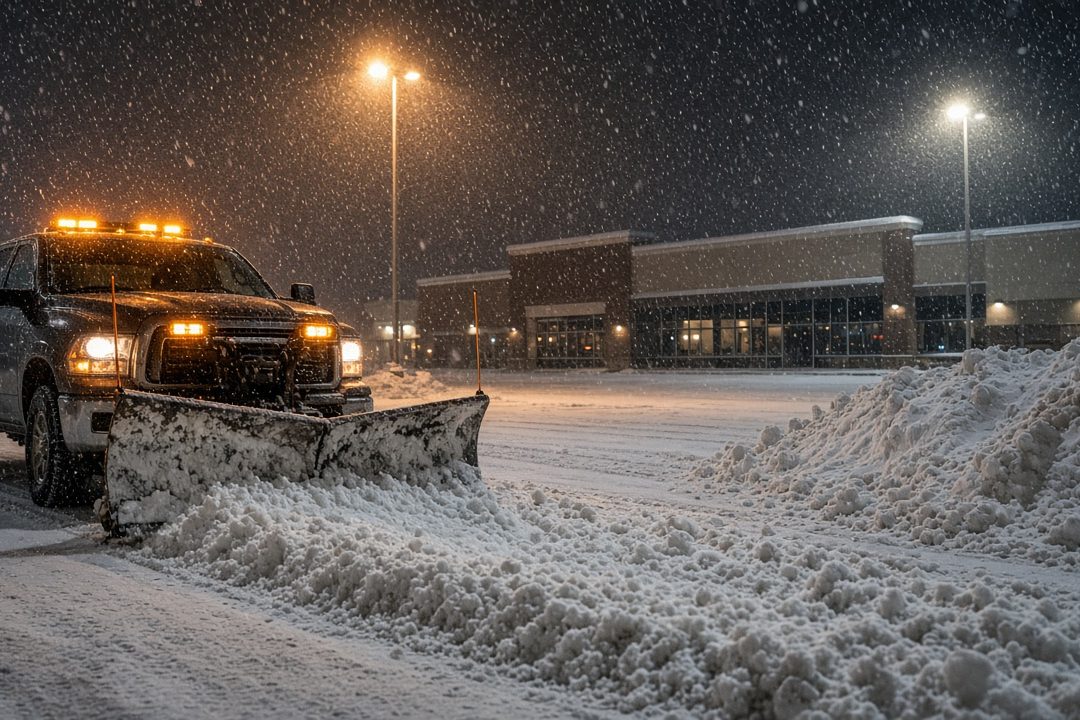
Pickups with plows clear smaller lots overnight, then come back for the drive lanes and entrances during long storms. Ask how the crew handles cars parked overnight.
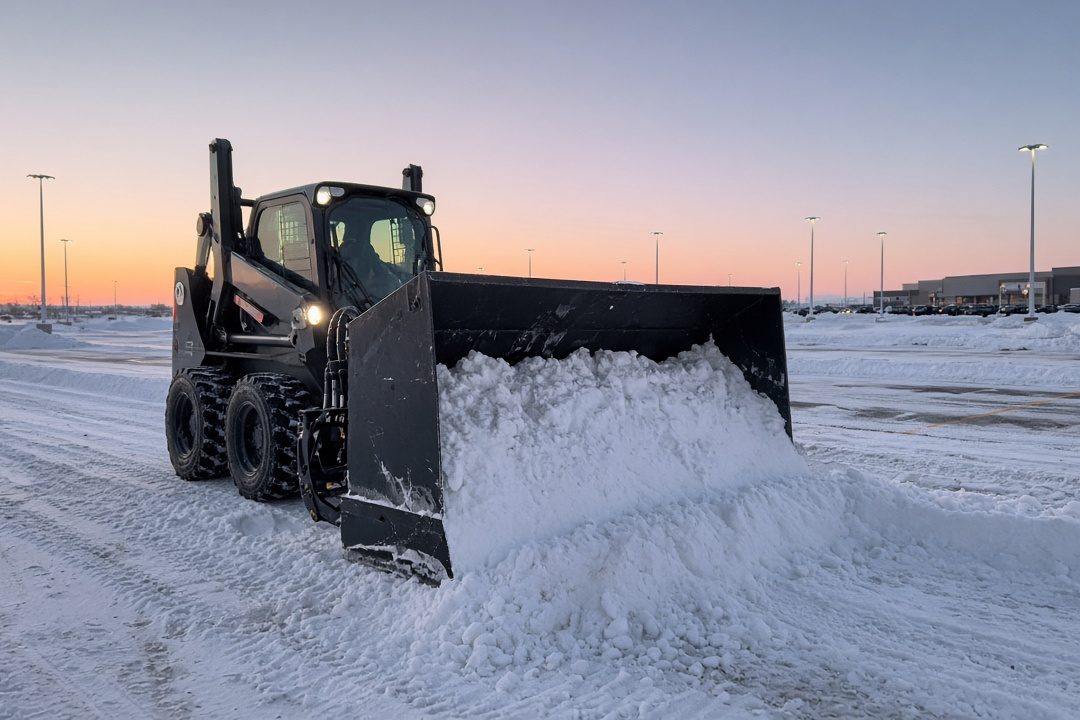
When a big storm lands, large sites need several machines working together: skid steers with pusher boxes, loaders and plow pickups.
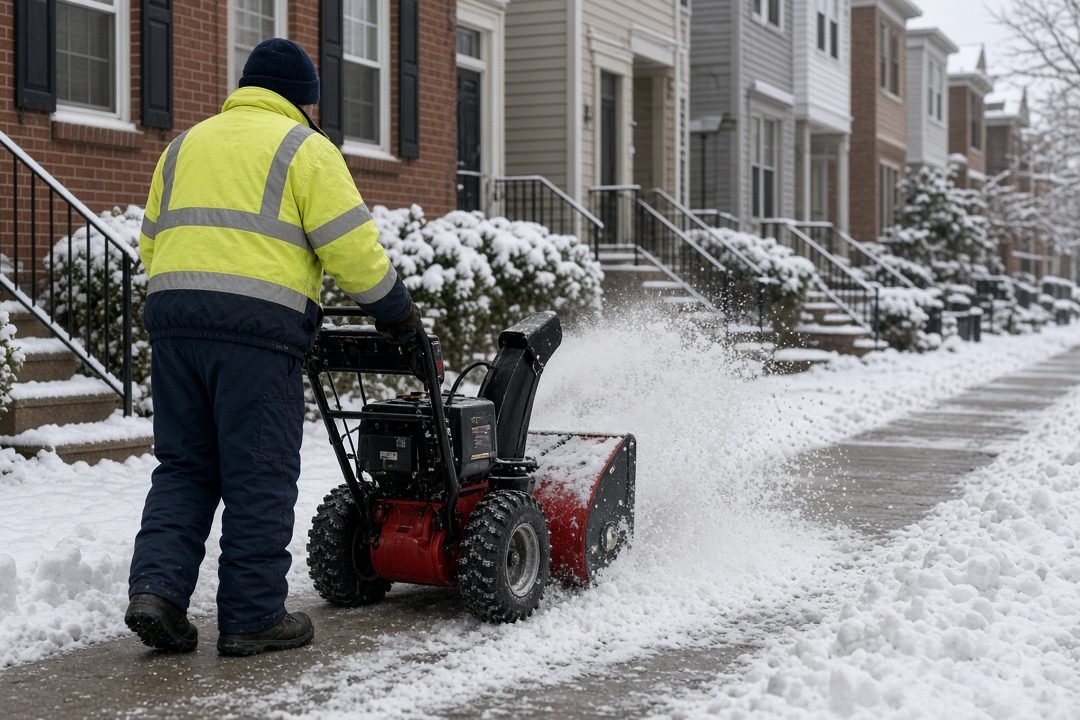
Walks, ramps and entrances are cleared by hand crews with blowers and shovels, then treated so they don't refreeze.
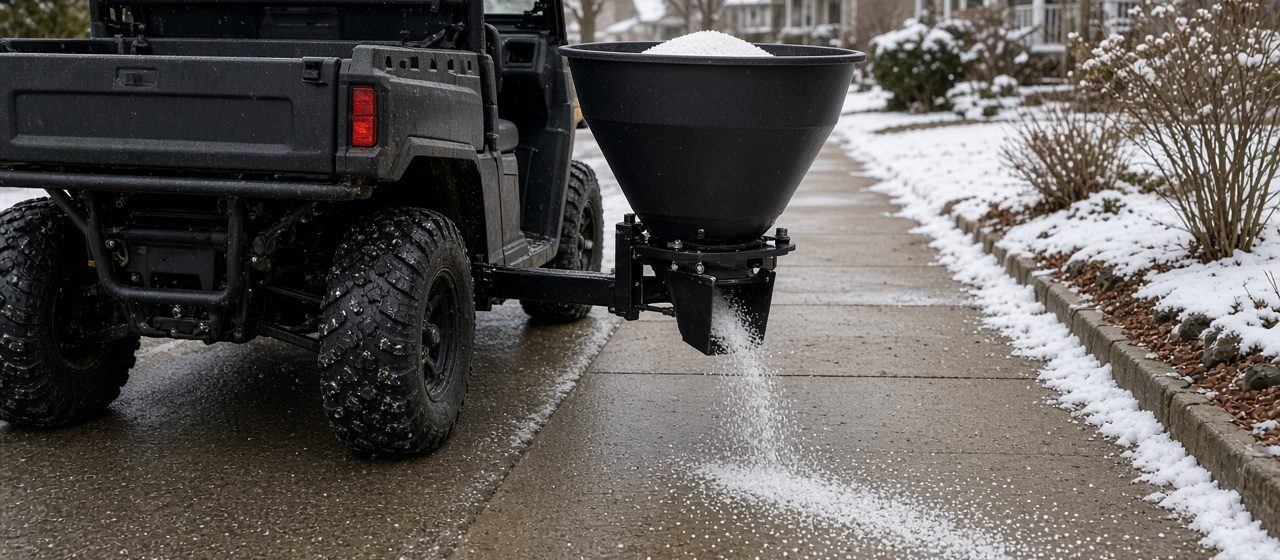
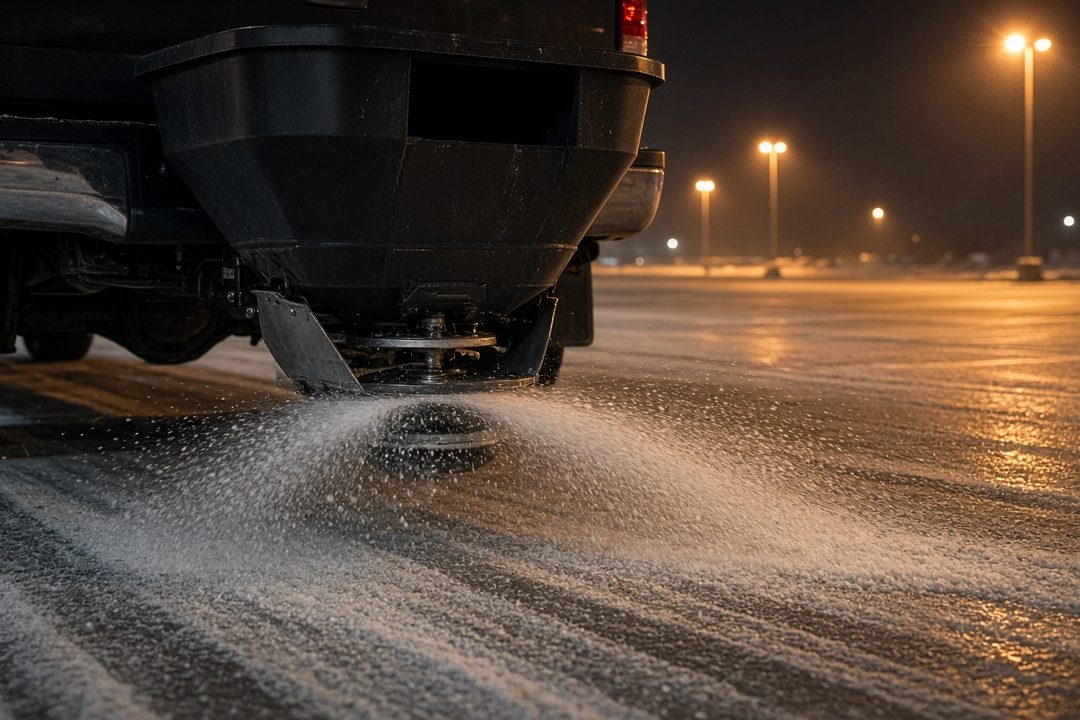
Plowing moves the snow. Ice control deals with what's left: the thin layer that packs down under tires and freezes. Contractors spread ice melt from trucks with tailgate spreaders on lots, and from walk-behind or ATV spreaders on walks and paths.
The normal January low in Truckee is 16.1°F (NOAA), so shaded steps, walks and drive aprons need the most attention. Ask what material your crew uses and whether it is priced per application or included.
The Ice Fighter shop lists truck tailgate spreaders, a receiver-mount spreader for an ATV or UTV, a 100 lb walk-behind spreader and pallets of ice melt.
Not on a contract yet? Storm-day calls happen. As an estimate, Homeblue's Truckee cost page lists $50 to $120 a visit for driveway snow removal and $59 to $88 an hour for snow blowing. These are estimates, not quotes.
Be ready to wait during a big storm, because contract customers come first. That's the strongest argument for signing up in the fall.
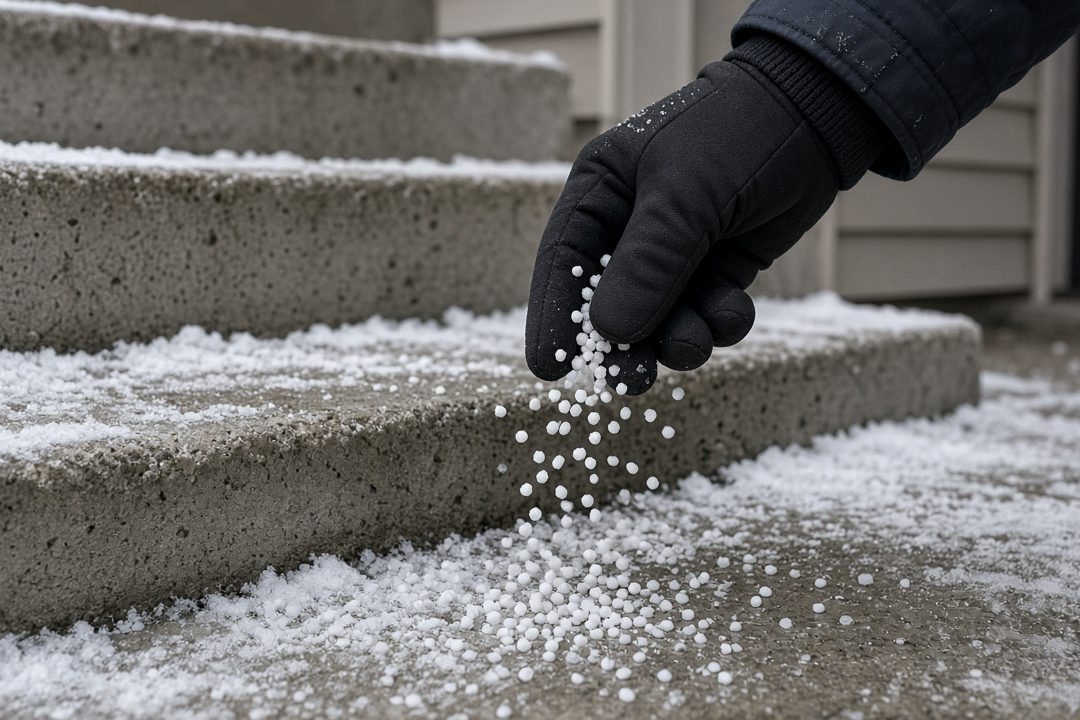
Front steps and walkways freeze first, and shaded ones refreeze every night. A visit can include clearing and a pass of ice melt.
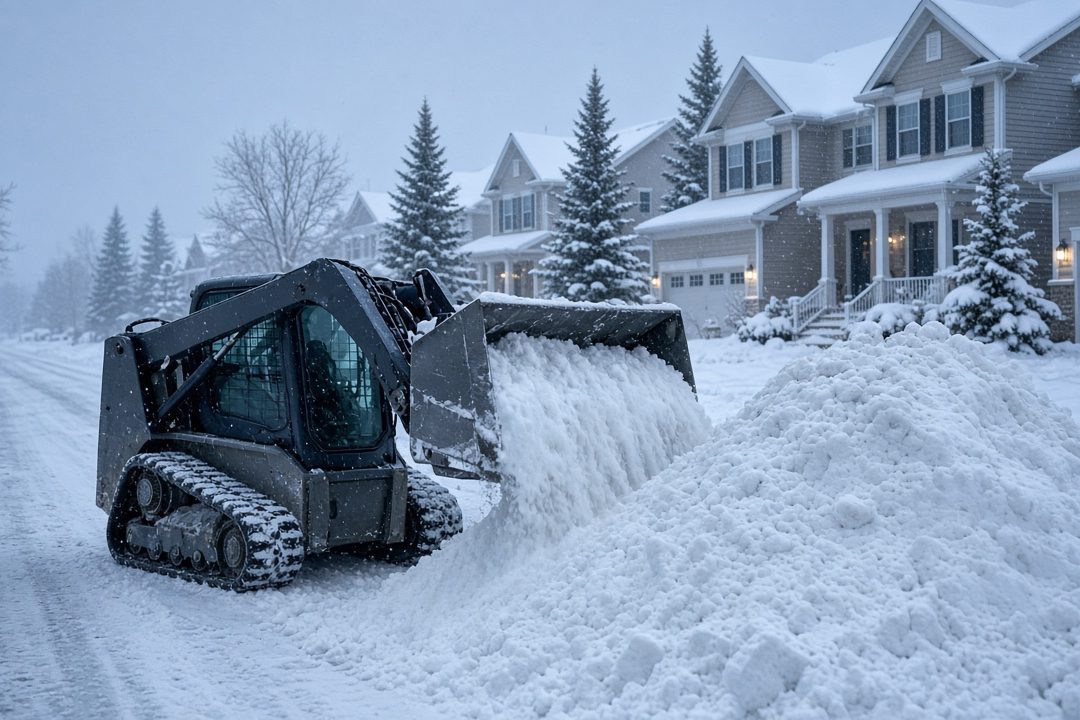
Skid steers move big piles in shared drives and condo lots so the snow stays on site, not in the Town right-of-way.
A one-time plow visit can clear the driveway and the berm the Town plow leaves at the end of it.
Here's a short version of the rules from the Town and county pages. Check the source before you rely on it.
| Place | Driveway berms | Where snow can go | Winter parking |
|---|---|---|---|
| Town of Truckee | The homeowner or resident clears the berm from their own driveway | Not in the road right-of-way (usually 60 ft, about 30 ft from centerline): it's for Town snow storage, not for individuals | No parking on Town roads or rights-of-way Nov. 1 to Apr. 30 (TTMC 10.17.030). Truckee PD may tow or ticket. Behind the snow poles is not enough |
| Placer County (North Lake Tahoe, Serene Lakes, Olympic Valley, Alpine Meadows) | Not covered here; check with the county | Not covered here; check with the county | No parking on county roads east of Emigrant Gap Nov. 1 to May 1. Fines $150 / $250 / $450 for the 1st / 2nd / 3rd+ offense |
Sources: Town of Truckee, Placer County. Incline Village (Washoe County, Nevada) rules are not covered yet. Full source list.
Before you head out in a storm, check the official sources. These are the ones Caltrans, Nevada and the National Weather Service point to.
Caltrans sets chain controls by level. At R-3, chains or traction devices are required on all vehicles, no exceptions, and a highway will often be closed before R-3 is imposed.
Caltrans QuickMap shows live chain controls, closures and cameras. roads.dot.ca.gov gives text status for I-80 over Donner Summit.
Heading to Incline Village, the Mt. Rose Highway or I-80 east? Check Nevada 511 at nvroads.com.
The National Weather Service office in Reno forecasts for Truckee and Lake Tahoe. Check weather.gov/rev.
Caltrans: always carry chains, and make sure they are the proper size for your tires. 4WD and AWD drivers must still carry them in chain control areas.
No parking on Truckee Town roads Nov. 1 to Apr. 30, or on Placer County roads east of Emigrant Gap Nov. 1 to May 1.
The Town plow leaves a berm across your driveway, and it's yours to clear. Book a contractor return pass after the Town plow.
Keep cars off the street and the right-of-way all winter, even on mild days. Placer County notes snow operations may still occur.
If you get stalled, Caltrans says to stay with your vehicle, and to give snowplows plenty of room.
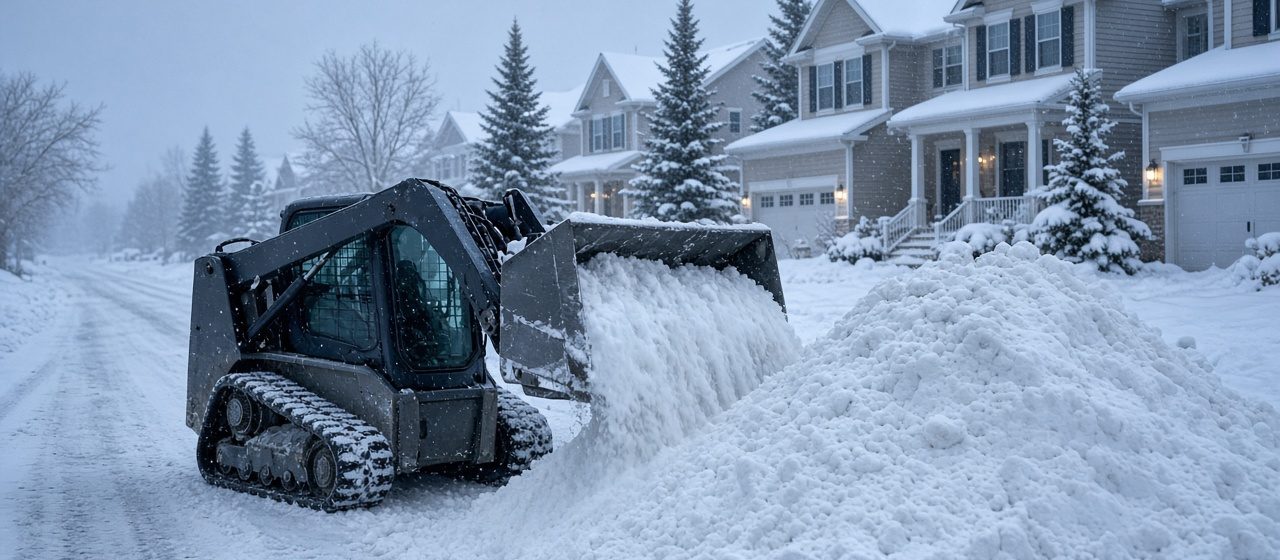
Snow work and landscaping go together. The snow and ice trade group SIMA reports 88,200 snow and ice businesses in the U.S., and more than half of them are lawn and landscape companies. The average operator earns 37% of its revenue from snow, and about 4 in 5 are sole proprietors, which means you are usually dealing with a local owner, not a national chain.
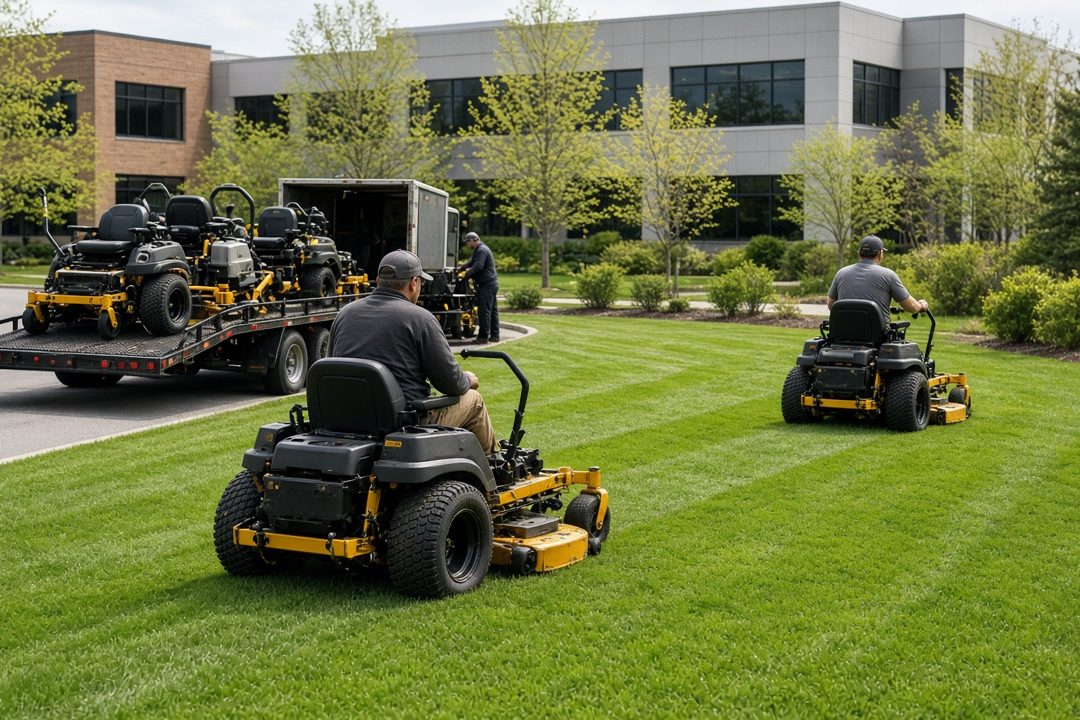
A crew that works your property in summer already knows where the edges, rocks, sprinkler heads and beds are when they're buried under feet of snow. When the snow is gone, the same crew can handle spring cleanup and repair plow damage.
It's also why customers stay. SIMA reports snow and ice customers are retained 93% of the time from one year to the next.
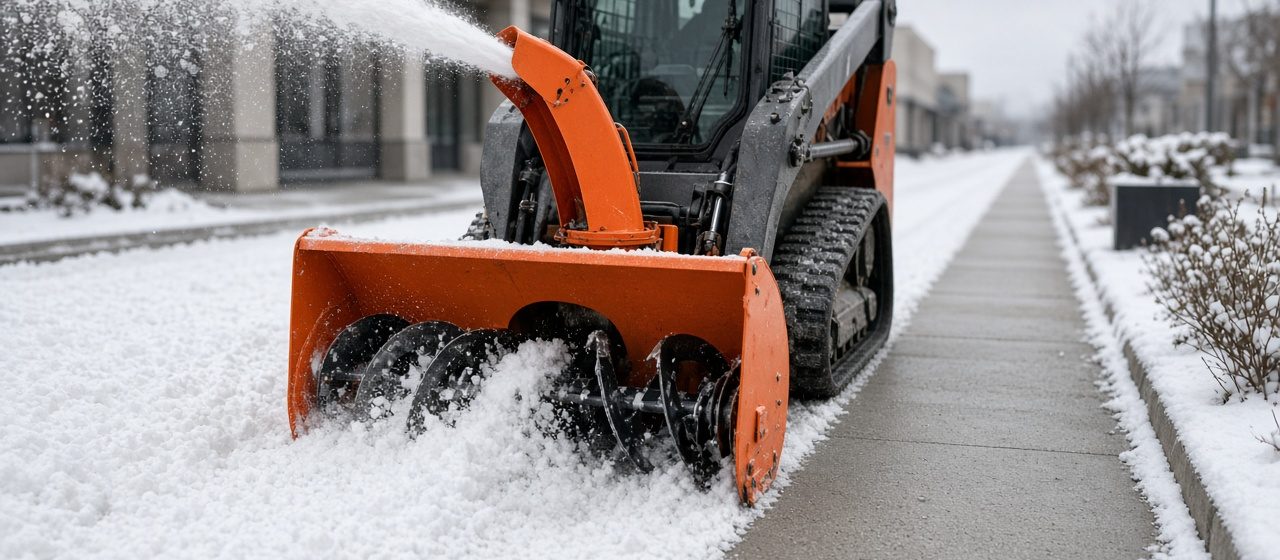
Treat these as estimates, not quotes. Homeblue's Truckee cost page (an estimator, not a contractor) lists $50 to $120 a visit for driveway snow removal and $59 to $88 an hour for snow blowing. For a regional reference, one South Lake Tahoe operator lists seasonal packages from $849 to $2,999 depending on the plan. HomeGuide's national guide puts roof snow removal at $200 to $500, or $1,000 to $2,000 for large or steep roofs. A local crew quotes your property for free.
You do. The Town of Truckee says it is the responsibility of the homeowner or resident to clear the berm from their own driveway. Ask your contractor whether a return pass after the Town plow is included; it is often the heaviest, iciest snow of the storm.
Not in Truckee. The Town bans parking on Town roads and rights-of-way from November 1 to April 30 (TTMC 10.17.030), and Truckee Police may tow or ticket. Parking behind the snow poles is not enough. On Placer County roads east of Emigrant Gap, including North Lake Tahoe, Olympic Valley and Alpine Meadows, parking is banned from November 1 to May 1, with fines of $150, $250 and $450 for the first, second and third or later offense.
On your own property. The Town of Truckee says the road right-of-way, usually 60 feet wide or about 30 feet from the road centerline, is for the Town's snow storage, not for individuals. Agree on where the piles go before the first storm.
R-1: chains are required on all vehicles except passenger vehicles and light trucks under 6,000 lb gross weight with snow tires on at least two drive wheels, and those must still carry chains. R-2: chains are required on all vehicles except four-wheel or all-wheel drive vehicles with snow tires on all four wheels, and those must carry traction devices. R-3: chains or traction devices are required on all vehicles, no exceptions, and Caltrans notes a highway will often be closed before R-3 is imposed.
You need to carry them. Caltrans says 4WD and AWD drivers must still carry chains for one drive axle to enter a chain control area. Snow tires need an M+S marking and at least 6/32-inch tread. Studded tires are allowed from November 1 to April 30, but Caltrans says they are not traction devices.
In Truckee, usually a seasonal contract. The Truckee Ranger Station averages 206.6 inches of snow a season and about 41.9 days a year with an inch or more (NOAA 1991–2020 normals). With that many plowable storms, a spot on a route is the safer bet, and per-visit costs add up fast.
The Town of Truckee says parking behind the snow poles is not enough. From November 1 to April 30, no parking on Town roads or rights-of-way.
The Town plows the road. The berm it leaves across your driveway is the homeowner's or resident's to clear, the Town says.
The road right-of-way is for the Town's snow storage, not for individuals. Keep your snow on your own property.
Heavy snow at the roof edge can melt and refreeze into ice dams that push water under shingles. A roof rake used from the ground keeps the edge clear. Hire a pro for anything that needs a ladder.
Plenty of people pair a contract for the driveway with a little work of their own between visits. Truckee snow is deep and heavy, so roof rakes, pushers and a gas two-stage blower like the Husqvarna ST224 come first; battery blowers such as the EGO 24-inch two-stage are for lighter storms.
Driving I-80 or the passes? The shop's mountain driving and traction picks include low-clearance cable chains, textile snow socks, a snow brush and scraper and a winter road kit. A heated walkway mat keeps one entry path clear, and a portable inverter generator such as the AIVOLT 4,200W can carry the basics through a storm outage. Run it outdoors only, far from windows and doors.
See every pick in the Ice Fighter shop, or let a crew do the heavy lifting.
Most contracts start at a set snow depth. Ask what it is, and how many visits a long storm gets.
Will the crew come back after the Town plow fills the end of your driveway? In Truckee, that berm is yours to clear.
Is roof snow or ice dam work included, priced per visit, or not offered? Get it priced before a big storm.
Not in the Town right-of-way. Agree on where the piles go on your property.
Ask for proof of liability insurance, especially for roof, HOA and commercial work.
Stake driveway edges, rocks, beds, sprinkler heads and low walls before the first snow so blades don’t chew them up.
Tell us what needs clearing, your ZIP code and anything that helps: driveway length, sidewalks, steps, a driveway and its plow berm, walks, decks and steps, a roof, a parking lot or a business entrance. Your request goes to a local snow and ice crew serving Truckee, Tahoe City, Kings Beach, Incline Village and nearby North Lake Tahoe communities, and they contact you directly with questions and a price.
No cost and no obligation to ask. Seasonal contracts fill up before the first snow, so fall is the best time to ask.
Before you sign, ask for proof of insurance, what snow depth triggers a visit, whether sidewalks and salting are included, and how storm-day calls are billed.